


The UK government's decision to introduce an EV Mileage Charge in 2028 will mark the end of zero-rated tax on electric cars after 27 years. Aside from the impact of the cost itself, how might used electric car values be affected?
For years, UK motorists have been encouraged to switch to electric cars - on the promise of lower running costs, reduced maintenance and a more favourable tax position.
However, the UK’s planned Electric Vehicle Excise Duty (eVED), due to be introduced in April 2028, has put a new spin on the costs issue - and some drivers may feel the goalposts are about to shift.
But discussions don’t focus solely on the day-to-day impact of the pay per mile road tax. Many are - understandably - now wondering: Will frustration over the eVED “tax by mile” translate into lower used-car values?
Under the announced plans, fully electric cars will face a mileage charge of 3p per mile, while plug-in hybrids will pay 1.5p per mile. So, for a fully electric car covering 8,000 miles a year, that means an extra £240 in annual pay per mile tax at the initial rate (before any potential subsequent inflation-linked increases down the line).
How will UK mileage reimbursement be affected?
eVED, which is effectively an electric car mileage levy, will make it more costly to run a personal electric vehicle for business. This means the standard electric car mileage allowance drivers rely on will face an immediate cut.
For battery electric vehicles, it effectively reduces the net value of the 55p/25p AMAP reimbursement by 3p for every single mile driven. (AMAP is 55p per mile for the first 10,000 miles, and 25p thereafter).
For Plug-in Hybrids (PHEVs), meanwhile, there will be an erosion of the net mileage payout by 1.5p per mile. (NB: PHEVs also continue to absorb standard fuel duty on petrol/diesel).
How another cost might shape future used car prices
While the cost-per-mile for an electric vehicle is likely to increase, it may not be enough to make electric motoring uneconomical for everyone - but it does add yet another cost for buyers to consider. And when the cost of ownership changes, so can the price people are prepared to pay for a vehicle - whether new or used.
Within the used-car market, the worry is that eVED could influence purchasing decisions, reduce demand for some electric models, and put further pressure on residual values. There’s plenty of uncertainty over how prices will be affected, but the charge arrives at a time when used EV prices are already being shaped by new-car discounts, growing vehicle supply - and rapidly evolving technology.
The promise of cheaper motoring
The affordability case for going electric has always depended on a driver’s individual circumstances. Drivers who can charge at home, particularly overnight on cheaper electricity tariffs, can make substantial savings compared with running a petrol or diesel car. EVs also generally have fewer moving parts in their drivetrains, which usually translates into lower maintenance costs.
However, not every motorist enjoys those kinds of advantages. Drivers who have to use public charging can face substantially higher electricity costs, while insurance, depreciation and the initial purchase price can offset some of those much-vaunted savings.
For drivers in this position, the eVED/EV mileage charge could make an already edge-case calculation less attractive.
Even if the overall cost of ownership remains competitive, the prospect of another ongoing expense can undermine confidence in the original and much-publicised proposition - namely that EVs would offer cheaper motoring.
Fair taxation or a change of deal?
But there’s another side to the argument. Petrol and diesel drivers already pay fuel duty as they use their vehicles, meaning those who consume more fuel generally contribute more in tax. As electric cars become more common, the government argues that their drivers should also make a contribution to public finances.
Moreover, as EVs become more common, fuel duty revenue is declining - and the government needs to plug the gap. And as mentioned earlier, EVs will have been tax exempt for 27 years.
So, might the charge affect used-car values?
The planned mileage charge will certainly increase the future cost of ownership, and would-be buyers may take that into account when deciding what a used electric car is actually worth. If buyers expect to pay more to run an EV, they may not want to part with as much cash as they once did.
This scenario could put further (downward) pressure on residual values for some electric models, particularly those already affected by new-car discounting, rapid technological improvements and an expanding supply of ex-fleet vehicles.
But the effect is unlikely to be the same across the board. High-mileage drivers will, unsurprisingly, face a larger annual bill than low-mileage motorists, while those who have access to inexpensive home charging may still find that an EV offers fairly attractive savings, overall.
Will drivers postpone making the EV switch?
Petrol and diesel vehicles could also benefit at the margins - if some consumers postpone switching to electric. Plug-in hybrids may attract additional interest from buyers looking for some sort of compromise, although they will face their own (albeit lower) mileage charge and continuing fuel costs, with the associated duty.
But none of this means used EV prices will plummet. A lot will depend on how buyers respond, how manufacturers price new vehicles - and how much of the anticipated EV mileage charge has already been priced into the market.
Nevertheless, uncertainty itself is rarely a good thing. Dealers want to know they will be able to sell any vehicles they buy, while private buyers want to know that any vehicle they purchase today will still be affordable to run in the future.
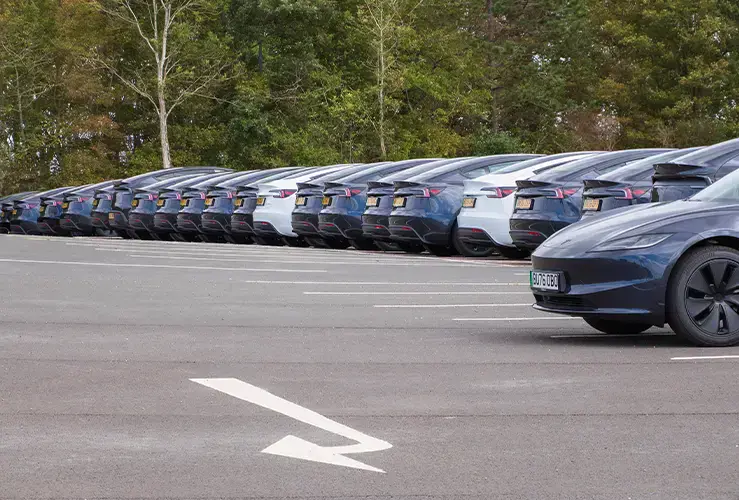
Photo credit: John - stock.adobe.com
A loss of confidence can be damaging
The wider concern is what eVED might do to buyer confidence as the EV revolution continues.
Research published in March 2026 by Electrifying.com found that 55% of surveyed motorists said the proposed charge would make them less likely to switch to an EV. While this measures stated intentions - rather than actual purchasing behaviour - it does suggest the policy could influence how EVs are perceived by the public.
For manufacturers, dealers and the wider automotive industry, this is important. Consumers who are about to make a major purchase want to understand not only today's costs, but also those of the future.
When there are changes to incentives, taxes and regulations, it can make it harder to make that decision. Even where the economics of electric motoring are solid, uncertainty may mean some buyers “wait and see” - rather than commit.
The goalposts question
In the end, eVED raises a tricky question for the UK’s policymakers: how do you make the tax system sustainable as motoring changes - without bruising confidence in the transition itself?
It doesn’t seem unreasonable that electric vehicles contribute to public finances as they become more common on our roads. But it is similarly reasonable for motorists to expect clear, consistent information about the costs they will face before they let go of their hard-earned cash.
Right now, for the used-car market, the concern is not necessarily that the introduction of eVED will cause values to collapse. It is that another cost, paired with uncertainty over future policy, could influence demand, valuations and the willingness of consumers to make the switch - a switch that we’ve heard so much about over the last decade and a half.
The message for the industry is clear: the financial case for electric motoring needs to be transparent, realistic and credible over the long term.
Because when consumers feel that the goalposts have shifted, the consequences may extend beyond the additional tax itself - potentially influencing not just whether they buy an electric car, but how much they are prepared to pay for a second-hand example.