



Potholes remain a major issue on UK roads, with local authorities continuing long-term repair programmes to tackle widespread damage. While significant government funding has been allocated to road maintenance, drivers are still frequently left dealing with unexpected repair bills caused by pothole damage.
In some cases, it may be possible to recover costs through a pothole damage claim UK process, either via the local council or your insurer provided you can demonstrate liability.
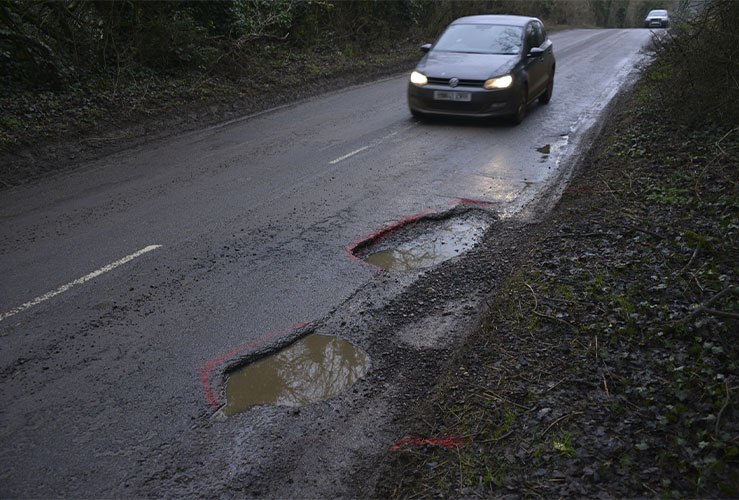
Can you claim for pothole damage in the UK?
Yes, you can make a council compensation pothole claim, but success depends on proving negligence.
To be eligible, you generally need to show that:
- The pothole caused the damage (supported by evidence or a mechanic’s report)
- The responsible authority failed to maintain the road to a safe standard
- The defect was not already marked for repair or recently inspected and scheduled
Roads are maintained by different bodies:
- Local councils: most B roads and minor A roads
- National Highways: motorways and major A roads
- Transport for London (TfL): London’s road network
Further official guidance on road maintenance responsibilities can be found via GOV.UK highways maintenance guidance.
Typical eligibility summary
- Good chance of claim: council failed to repair a reported pothole within a reasonable timeframe
- Uncertain outcome: pothole was not previously reported or inspected recently
- Low chance: road was recently inspected and deemed safe
Most claims relate to car pothole repair costs such as tyres, wheels, suspension, and alignment damage.
How to make a pothole damage claim step-by-step
- Stop safely and document the scene (if safe and legal to do so)
- Take clear photos of the pothole and surrounding road context
- Photograph vehicle damage immediately
- Record details (date, time, weather, exact location, landmarks)
- Obtain a mechanic’s report confirming the cause of damage
- Identify the responsible authority (council, National Highways, or TfL)
- Submit your claim with all evidence attached
- Keep copies of repair invoices and correspondence
This structured approach strengthens any road damage claims UK submission.
Council claim vs insurance claim: which is better?
You generally have two options when recovering costs.
Factor | Council claim | Insurance claim |
Speed | Slow (months) | Faster |
Success certainty | Uncertain | More predictable |
Cost recovery | Full or partial | Minus excess |
No-claims impact | None | May affect bonus |
Effort required | High | Low |
Council claims can be worthwhile if successful, but many drivers opt for insurance when facing urgent car pothole repair costs.
Do pothole claims affect your insurance?
A pothole claim does not directly affect your insurance unless you choose to claim through your policy.
However:
- You may lose part of your no-claims discount if you claim on insurance
- You must usually report the incident promptly to your insurer
- You cannot recover the same cost twice (from both council and insurer)
Some drivers notify insurers early but attempt a council claim first, especially where liability may be clear.
Council claim vs insurance claim: which is better?
Choosing the right route depends on urgency, evidence strength, and financial impact. For smaller claims, insurance may be more practical. For well-documented cases of negligence, a pothole damage claim UK against the authority may offer full reimbursement.
Do pothole claims affect your insurance?
Insurers typically require notification of any incident, even if you pursue a council claim first. While reporting does not automatically increase premiums, making a claim through your policy may affect your no-claims bonus depending on your terms.
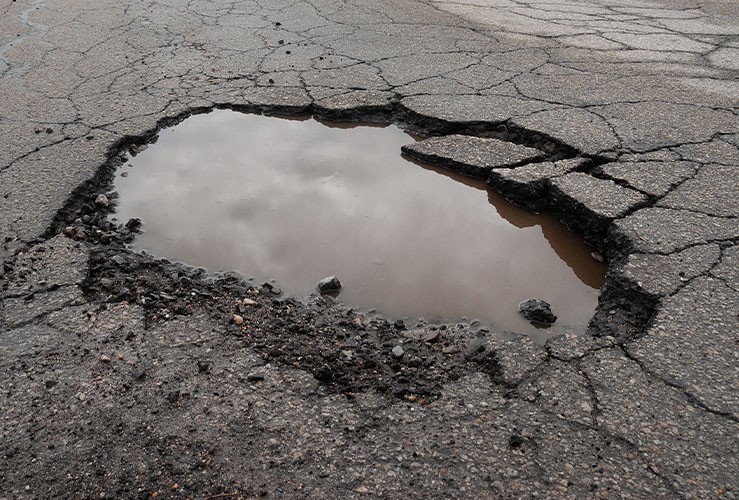
What if the potholed road is privately owned?
The road owner is responsible for keeping the road in good condition.

Collecting evidence for a pothole damage claim
To support your pothole claim, try to gather the following - if it's safe.
- Take pictures of the pothole immediately (only if it is safe to do so).
- Take medium-range shots to establish the pothole's position
- Get shots that include landmarks/buildings to help authorities locate the pothole.
- Take photos of the damage to your car.
NB: you’re not legally allowed to stop on a motorway and take photos, nor indeed for any other reason (apart from being involved in a breakdown, collision or other emergency).
Other notes and information to collect:
- Note down names of nearby landmarks.
- Note down the date and time you hit the pothole, weather conditions etc.
- Make a simple sketch of the area and the pothole's location.
- If there were any witnesses, collect their contact details and ask them to write down what they saw.
- Keep bills and records related to the repairs needed on your car. This is critical since you are claiming for repair costs, not general compensation.
Fast claim
You may decide to make a 'fast claim' which as the name suggests is much quicker than a full claim.
After you've made your claim, there are three possible outcomes:
- You win and get your repair costs refunded
- You're offered part of the sum claimed
You don't have to accept this, but it's better than nothing and a full claim win is far from assured.
- Your claim is rejected
You can either give up or try a full claim.
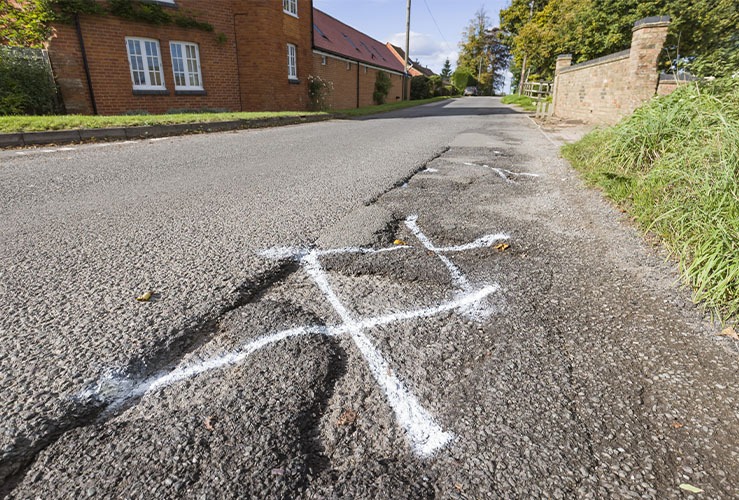
A full claim
In essence, a full claim involves:
- Making a Freedom of Information request for the relevant body’s road repair policy and inspection history, and then finding out if the pothole in question had indeed been identified, attended to or neglected.
- Going through the information passed back and forth to determine if and when inspections had been carried out. This could take a long time and in the end may not be worth the time and hassle.
- If the road in question had a history of potholes
- Frequency of any safety patrols
- Whether inspections were on foot or in a vehicle
- Speed of any inspection van (going too fast?)
- If a pothole had been previously reported, what repairs - if any - were undertaken to address it?
Were national or local authority policies followed?
If not, you may be able to prove they were negligent in this regard.
Submit your claim for pothole damage
When submitting your claim for pothole damage, use neutral language - since it might be read out in court if it gets that far (hopefully it will be cleared up before that). In your account, make constant reference to the collected evidence.
What if your claim fails?
You then have the option of going to a small claims court, seeking a maximum of £10,000 (£5,000 in Scotland).