


In the coming years, the car key fob is likely to become far less common. It will be replaced by the digital car key - which promises to be more secure and eliminate the risk of a ‘relay attack’. Here’s all you need to know.
Thirty years ago, getting into and starting your car was a simple, physical process.
You used a real key to access your vehicle, and the same key - usually - to turn the ignition.
Fast forward to today, and most cars are accessed with a key fob (which sends the vehicle a signal that unlocks the doors). The engine is then either started with a physical key, or by pressing a ‘start’ button that has been enabled by the fob.
But in recent years, a new way of getting into and starting your car has emerged: the digital car key, stored on your smart phone.
Digital car ‘smart’ key: How does it work?
You add your digital car key to a service like Google Wallet, or Apple CarKey. Your device then sends a message to your car telling it to open the doors and allow you to start the engine. It works like a physical key remote for your car, but digital.
Digital car phone keys use Bluetooth and Ultra-wideband (UWB), the latter of which is used by Google Find Hub and Apple’s Airtag. They can also fall back on NFC (Near Field Communication) technology, which may also be used to authenticate the car key in Google Wallet when it's being set up.
So, does using a digital car ‘smart’ key make our driving lives simpler, easier, and more secure?
Whether it's simpler and easier depends on how you feel about using and relying on smartphones. Most of us use our phones for dozens of everyday tasks, from paying for transport and buying groceries to navigation and communication - so using it to access our cars seems like a logical next step.
With a Google Wallet key, for example, you simply hold your phone against the door handle. And if it has ‘passive entry’ enabled, you don’t even need to do that - you can simply walk up to your car and the doors will unlock, with the engine ready to go.
And as far as security goes, a digital smart key for cars eliminates the risk of a key remote car fob ‘relay attack’ - where a criminal uses a device to amplify the fob’s signal and gain access to your car - even if the fob is relatively far away (for example, left in a coat pocket just inside your front door).
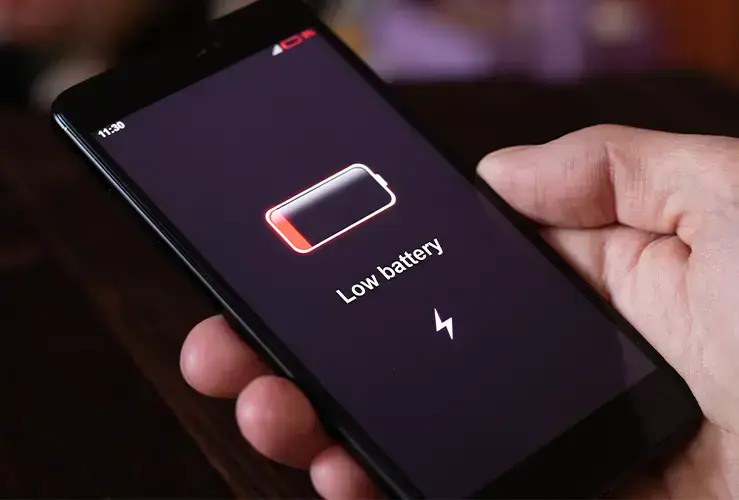
What if your phone battery dies?
As with all things smartphone-related, there’s always the worry that you won’t be able to get into your car if your device’s battery runs out.
But on some compatible Android devices, even when there’s no battery, reserved power can be used for a few hours in order to gain access to your car (usually using NFC).
What if your phone battery has been dead for 24 hours?
If your smartphone has been dead for a long period, the digital phone key will no longer work. You’ll need to either:
- Charge your phone
- Use a physical backup key (which works like a traditional key fob)
- Use a key on a smartwatch or another device that you have previously authorised
- Using the manufacturer's app on another phone (if so configured)
- Contact your roadside assistance provider
So can I share my digital car key with someone else?
Yes, with Google Wallet, you can share your car key with other devices, and control how much access they have. For example, you may give full access to your partner, or limited door-only access to your child. You can also revoke any digital car keys - including your own if your phone gets stolen.
Apple’s CarKey allows similar key-sharing functions.
What if someone steals my phone while it is unlocked?
This is actually one of the biggest security concerns with a digital car key.
If someone does steal your phone while it is unlocked, they may be able to access your car. Google Wallet is arguably more susceptible, since once a thief is ‘in’ your phone, they can use it to start your car.
With Apple CarKey, the same is true if ‘Express Mode’ is on - which doesn’t require Face ID, Touch ID, or passcode.
However, most phones lock out if left unused for a certain period of time, so it’s unlikely a thief would manage to keep the phone ‘awake’ for long enough to access your car (however, it’s technically possible).
And in the end, such a situation is comparable to having your regular car keys or key fob stolen.
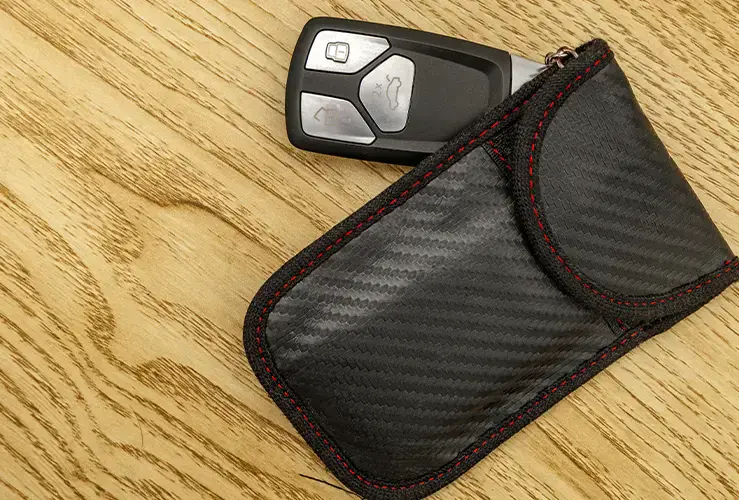
Is a digital car key backup fob susceptible to a relay attack?
One of the big advantages of a digital car key is that it cannot be subjected to a relay attack. But if you have a backup key fob (for if your device runs out of charge, for example), then it is indeed susceptible to a relay attack. You still need to ensure your backup fob is stored away from doors and windows, ideally in a ‘faraday pouch’ which blocks signals.
So, should you use a digital car key?
Some may feel using a digital car key is inviting yet more reliance on the smartphone - a smartphone that can run out of charge, or be lost or stolen.
However, there are security advantages. You can add or revoke the digital key as and when needed (including if your device is stolen). It also protects against relay attacks, and keys can be shared easily with others, if need be.
But if you have a backup key fob for your digital key, be sure to keep it secure.