


Your car may know more about you than you realise. Modern vehicles constantly collect and transmit data that can improve safety and convenience - but that same data can reveal where you've been, how you drive and even aspects of your daily routine. Who has access to that information? And what happens if your car’s data falls into the wrong hands?
Back in 2006, the UK’s best-selling car was the Ford Focus - a very basic machine by today’s standards.
It was essentially a mechanical vehicle with a few electronic systems - limited onboard diagnostic, a CD player - Bluetooth on higher spec models.
But the 2026 version of the Ford Focus is a very different beast.
Today the Focus has embedded cellular connectivity, GPS positioning, automatic software updates, and live vehicle diagnostics - plus a host of other systems that send and receive the car’s data to and from Ford’s servers, and multiple other cloud-based systems.
When looking at connectivity statistics about cars over the last 20 years, it's clear there has been a huge shift. Here’s how the Ford Focus has gone from a basic, offline car, to a highly connected ‘computer on wheels’:
Era / Model | Connectivity level | What the car can do with a driver’s data |
Ford Focus (2006) | Very low (essentially offline) | No built-in internet or GPS tracking. Data stays inside the car (basic diagnostics only). No remote access or manufacturer visibility. |
Ford Focus (circa 2016) | Moderate (early connected car) | Optional cellular connectivity and apps. Can send diagnostics, offer emergency calling, and provide basic remote features (such as locating the car or checking its status) if services are enabled. |
Ford Focus (modern 2020s–2026) | High (always-on connected device) | Built-in cellular & GPS. Continuous or periodic data sharing (location/health/driving data). Remote control via apps, over-the-air updates, live traffic, and cloud-linked services. |
Constant transmission of driver’s data
Whichever car you own - if you bought it in the last 8 to 10 years, it's almost certainly generating huge amounts of data, every time you drive.
Even when parked up at night, it may still be sending and receiving data.
Most of us know about GPS navigation data transfer, but we might not be aware of just how much other data is being gathered.
So, what driver data is being collected about you and your driving habits? And who has access to it?
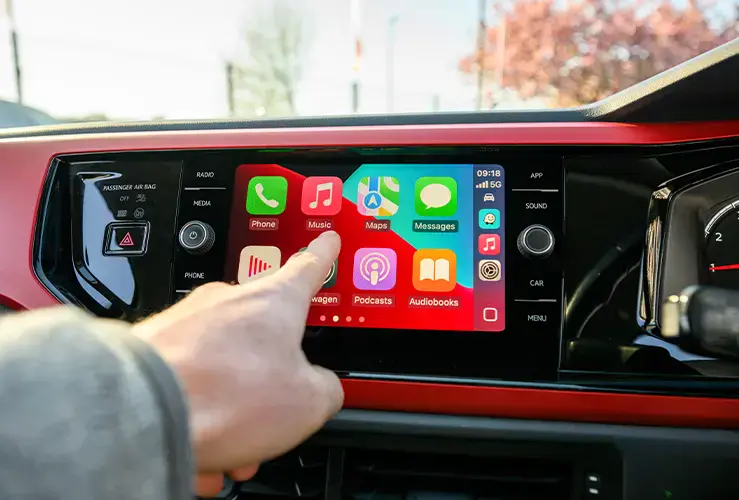
Image credit: Harry - stock.adobe.com
What data does your car collect?
A quick trip to the supermarket or your morning commute might generate hundreds of data points.
Data collected by your car (and by extension cloud-based applications around the world) include:
Location data
GPS routes, frequently visited locations, and real-time vehicle position. (As we move towards autonomous driving cars, this kind of data will become increasingly important for the safe and effective function of our vehicles.)
Driving behaviour
Speed, acceleration and braking habits, steering inputs, and seatbelt usage - can all be collected.
Vehicle performance
Engine diagnostics, fuel or battery levels, maintenance requirements, and fault codes. This will also become even more critical in the age of auto-driving cars.
Personal information
Phone contacts can be synced via Bluetooth, call logs and messages might be gathered (depending on system permissions), and driver profiles and preferences are likely being collected.
Why is this driver’s data collected?
Carmakers have a host of practical reasons for collecting this vast amount of data from you and your vehicle.
For a start, the data is used to improve performance and reliability. Data collection is also necessary to enable connected features like live traffic updates, remote vehicle access via specific apps, and emergency assistance services.
Data collection can also help with predictive maintenance - where the vehicle maker can predict the failure of a component before it actually happens.
And collecting information of how, when and where you drive can also help inform the development of future models. Statistics about cars is gold-dust for vehicle makers - and this kind of real-time data collection is a key source.
In short, if you want services like live traffic updates, over-the-air software updates, and warnings about impending parts failures, then you have to accept that some data collection is essential.

Who can see the data?
By this point, you might be wondering: who gets to view and analyse this data?
Well, as you might expect, car manufacturers are a key data receiver, because they need to access your vehicles’ diagnostics and usage information.
But dealerships and service centres may also have access to some data - particularly in relation to maintenance and fault information.
Then there are the insurance companies, which can gather data if a given policy is usage or telematics-based. This data collection is very much focussed on things like the speed you travel at and what time of day (or night) you usually drive.
Third-party services may also collect data on things like navigation, entertainment usage, and app providers.
Police, too, may gain access to some data - although this must be done through the proper legal processes. As you might imagine, such data collection would only be requested if a crime is suspected, and movements of the vehicle or vehicle owner need to be established.
What kind of data - and how much - will also be influenced by the carmaker in question, as well as the selected privacy settings.
In this country, UK GDPR and the Data Protection Act of 2018 generally govern this kind of data, since it involves location information that can be linked to a particular individual.
Privacy concerns
Understandably, with so much driver data being collected, some people worry about their privacy.
Others are less concerned about it - or might not fully understand what they’re signing up to.
Ultimately, there are questions of ‘informed consent ‘ - especially when data collection has so many strands and can end up in so many different places.
A key worry relates to data breaches and hacking. How might such data be used to the detriment of the average motorists?
Worst-case scenarios include:
- Identity fraud (gaining access to name, address, phone number etc.)
- Thieves being able to work out when a car is less likely to be used
- Thieves gaining access to a vehicle (remote locking, digital keys etc.)
- Criminals working out where a person lives or works
- Medical issues might be inferred from car usage (e.g. repeated hospital visits)
There may even be concerns over government agencies (UK or foreign) being able to access such data.
In the age of the targeted advert, there can be anxiety about how data is shared with commercial partners and advertisers.
With all these risks in mind, there has been growing scrutiny of car firms from privacy regulators and consumer groups.
How you can protect your privacy as a driver
Thankfully, there are a number of things you can do to help control what kind of driver data is being sent to outside entities. On the downside, thorough management of your data might take a bit of time.
First up, you should review all the privacy settings in your vehicle and associated apps.
Whenever you set up a new connected service, you would ideally read all the associated data-sharing options, and limit unnecessary app permissions.
With telematics services, some features can be turned off; work out which are worth the trade-off for privacy.
Finally, when the time comes to sell your car, take the time to delete all personal information.
Conclusion
Unless you limit yourself to older vehicles - or have a particular fondness for classic cars - chances are your vehicle heavily depends on connectivity and the transfer of data.
As time goes on, vehicles will almost certainly become even more connected - especially when auto-driving cars arrive.
But there are big benefits to this data collection - it makes your motoring life much more convenient and safe than in years gone by. This data can also help improve your vehicle’s performance.
Despite the advantages, however, drivers are increasingly concerned about what kind of data - and how much - is ending up on shadowy servers many thousands of miles away.
So as we move into the rapidly-changing tech-based future, particularly in relation to autonomous-driving cars, it’s critical we understand what our cars know about us - and what we can do to control our data.
Because our cars may know more about our habits than our smartphones - and that information doesn't always stay in our cars.