



Learn about write-off cars, what each category means, and why running a vehicle history check is recommended if you’re thinking about buying a second hand car.
Whenever a car gets damaged in an accident, the vehicle’s insurer will do some hard sums.
If the repair bill and other costs are likely to exceed the car’s value, then the insurer will class it as a ‘write-off’.
Too expensive to repair = write-off.
In the UK, a vehicle labelled as a write off will fall into one of four categories: A, B, S or N.
A and B are not repairable, and cannot legally be driven on public roads ever again - even if they are well-repaired. With an ‘A’ write-off, car scrappage is the only option. However, usable parts from cat B cars can be salvaged.
But a vehicle classed as S or N is considered a repairable write-off - and can be repaired and driven again.
‘S’ stands for structural damage (to chassis, structural pillars etc.).
‘N’ stands for non-structural damage (to bumpers, headlights, paintwork etc.)
The 4 Write-off Categories Explained
Category | Can it be repaired? | Can it go back on the road? | Typical damage |
Cat A | ❌ No | ❌ No | Completely destroyed |
Cat B | ❌ No | ❌ No | Severe structural damage |
Cat S | ✅ Yes | ✅ Yes | Structural damage |
Cat N | ✅ Yes | ✅ Yes | Non-structural damage |
Misunderstandings around ‘write-offs’
The term ‘write-off’ is sometimes misunderstood to mean ‘can never be driven again’ - but this isn’t always true. Only category A and category B cars may never be legally driven again.
Cat S and N cars can be repaired and driven again (repairable write-offs).
Another misunderstanding is that ‘total loss’ only relates to A or B category cars. In fact, all four categories are sometimes called ‘total loss’ vehicles, even though S and N category vehicles can be repaired.
S and N vehicles will always be classed as car write-offs
Many people in the UK seek out cat S and N cars for sale - with a view to getting a good price on a car and then repairing it themselves and driving it, or to do up and sell on.
A key downside to buying an S or N category vehicle is that it will always have the ‘write off’ label - which will almost certainly harm any resale price.
The ‘write off’ classification is recorded in:
- Insurance industry databases
- Vehicle history check databases
- DVLA databases (sometimes)

Write-off cars: How do I find out if a car has been written off?
In most cases, you can run a vehicle history check with an online service and find out if a car has been classed as a car-accident insurance write-off.
Examples of vehicle history check services include: HPI Check, Experian AutoCheck, CarVertical, and Total Car Check.
Car write-off statistics for the UK
While there are no official car write off statistics for the UK, we can still estimate how many cars are written off each year from available data.
According to the Association of British Insurers (ABI), in 2024 there were 2.4 million motor insurance claims. The cost of claims was £11.7 billion, with the average private motor claim was £4,900.
It is estimated that between 20 and 30% of car insurance claims result in a write off classification. This percentage has risen in recent years because cars have become much more complex, and therefore more costly to repair.
A note on comprehensive car insurance
If an accident was your fault and your car was damaged, you’ll only be covered if you have comprehensive car insurance. If you have Third Party cover, you’ll need to pay for the damage yourself. But the vast majority of UK drivers do have comprehensive car insurance.
Car replacement if a car is a write-off
A minority of insurers may offer a replacement car if the model in question is very new. But in most cases, providers will not offer a car replacement if a car is a write-off - instead they will pay out the market value of the vehicle.
Why doing a vehicle history check is highly recommended
If you’re thinking about buying a second hand car - especially from a private seller - then it’s highly recommended you carry out a vehicle history check first. Investing a small sum in such a check could save you a lot of stress and cost later on. There could also be safety implications if the car has been damaged.
A vehicle history check will tell you if a car has been written off, which category it lies in, and when the write-off was recorded.
In rare cases, a write-off might not be recorded, due to things like:
- Delay in reporting the write off
- Administrative error
- The car was repaired by the owner and therefore not reported to the insurer
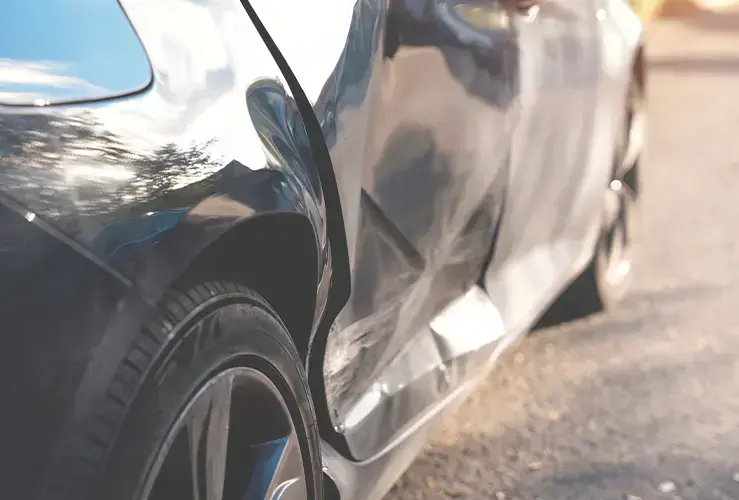
Write-off categories explained in more detail
Category A (Cat A)
This is the most severe category.
- The vehicle in question is beyond repair.
- It must be crushed completely.
- No parts should be reused.
- It can never return to the road.
- It’s a true write off - scrappage is the only option.
Examples:
- Burnt-out car after a fire
- Completely destroyed in a major collision
- Extensive flood or biohazard contamination
Category B (Cat B)
Very serious damage, but some parts can be salvaged and potentially used in other vehicles.
- The bodyshell/chassis must be crushed.
- Some components (engine, gearbox, wheels, interior, etc.) may be removed and sold as spare parts.
- The vehicle itself can never be driven again.
Category S (Cat S)
Repairable, but with structural damage.
The "S" stands for Structural.
Damage has affected part of the vehicle's structure, such as:
- chassis
- crumple zones
- suspension mounting points
- structural pillars
- subframe
The insurer decided repairing it didn’t make financial sense, but it can legally be repaired and returned to the road if restored to a roadworthy condition. As mentioned, the Cat S marker remains on the vehicle's history permanently.
Pros
- Often 20 to 40% cheaper than an equivalent undamaged car.
Cons
- Lower resale value.
- Insurance can sometimes cost more or require specialist insurers.
- Repairs must be done to a very high standard.
Category N (Cat N)
Repairable with no structural damage.
The "N" stands for Non-structural.
Damage might include:
- bumpers
- doors
- wings
- headlights
- electrical systems
- airbags
- interior
- paintwork
Even though there's no structural damage, Cat N cars can still have undergone expensive (and extensive) repairs - for example, replacing airbags or complex electronic systems. Like Cat S cars, they can be repaired and legally returned to the road, and the Cat N record stays with the vehicle.