

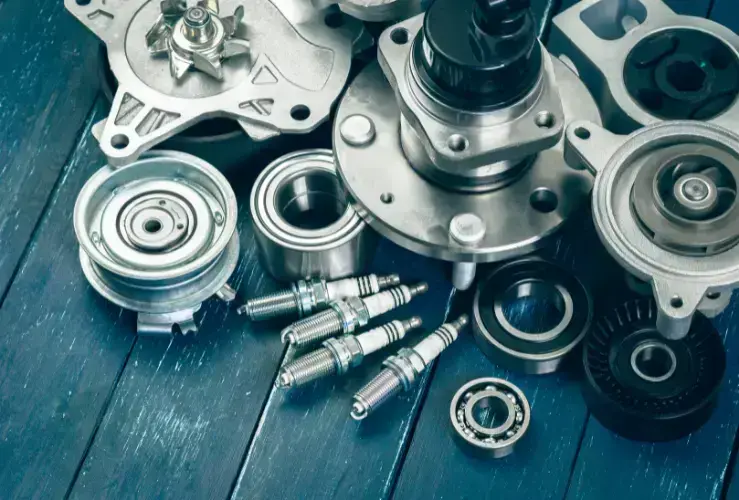
If you need to buy car parts UK, you’ll usually choose between OE parts (Original Equipment), aftermarket car parts, or used components. You can get them fitted through independent garages, authorised dealers, or install them yourself depending on cost, skill level, and time.
Each option comes with different trade-offs in price, warranty, and convenience.
Note: You should always check your vehicle handbook for any fault remedy before carrying out any work on your vehicle. If you are unsure of what is required to fix any problems, please consult a professional.
Buying car parts from independent garages
Independent garages are a popular choice for sourcing and fitting replacement parts.
Key advantages:
- Lower labour costs than dealers
- Access to both OE parts and aftermarket car parts
- Flexible sourcing (you can often supply your own parts)
- Established local relationships and trust
Things to consider:
- Quality of parts may vary depending on supplier
- Warranty terms are usually shorter than main dealers
- Always confirm whether OE parts are being used if required
Independent garages are often the most cost-effective option for routine repairs and servicing.
Authorised dealer vs independent garage: which is better?
Choosing between a dealer and an independent garage depends on budget, vehicle age, and warranty requirements.
Comparison table: dealer vs independent garage vs DIY fitting
Factor | Authorised Dealer | Independent Garage | DIY Fitting |
Cost | High | Medium to low | Lowest |
Warranty | Strong (manufacturer-backed) | Varies by garage/part | None |
Quality | OE parts only | OE or aftermarket | Depends on user skill |
Convenience | High | High | Low |
Expertise | Manufacturer-trained | Experienced general technicians | Self-taught/online guides |
For newer vehicles still under warranty, dealers may be preferable. For older cars, independents or DIY often provide better value.
Order the part and fit it yourself
If you have the required mechanical knowledge and experience, you may decide to buy the part and fit it yourself.
There are many online outlets that sell both Original Equipment parts and third party copies.
Carmakers have come to embrace the fact that some motorists buy parts online. For example, Ford now has an Official Ford eBay Store.
Some suppliers also allow you to collect the part in question - which is ideal if you want to fit it in a hurry.
Are aftermarket car parts safe?
Aftermarket car parts are widely used and often significantly cheaper than OE parts.
Improvements in quality include:
- Better manufacturing standards over the last decade
- Wider use of certification systems (e.g. ISO standards)
- Many parts now match or closely replicate OE performance
Pros:
- Lower cost
- Wide availability
- Suitable for most non-critical repairs
Cons:
- Quality varies between manufacturers
- Some parts may not match OE lifespan
- Warranty coverage can be limited
For safety-critical components (brakes, steering, airbags), always ensure parts meet recognised safety standards and are installed correctly. See official guidance on vehicle safety checks at GOV.UK vehicle safety guidance.
Buying a used car for parts
Some car owners even buy old versions of their current car from which to salvage replacement parts. However, this is not a common solution because of the storage space the used car takes up, and the mechanical knowledge, skill and time required to harvest parts.
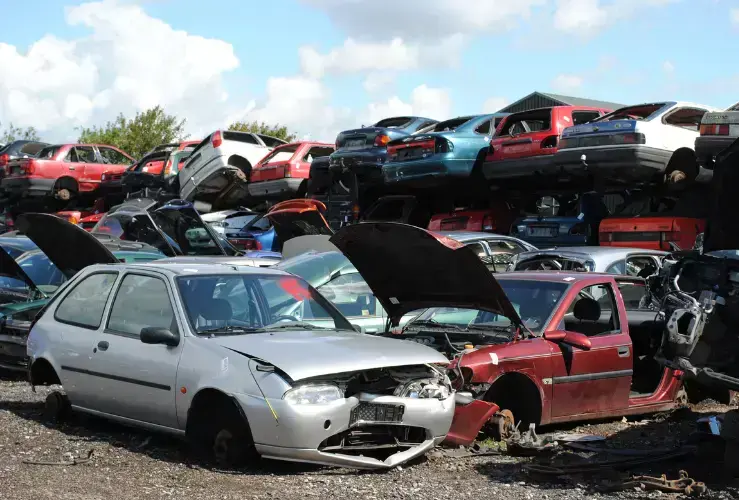
What about scrap yards?
Scrap yards (or junkyards) buy vehicles that have been written off/totalled in a collision, or which are no longer roadworthy due to certain faults or age.
However, many parts in such vehicles are still usable. These may be sold off to private customers - often at very low prices.
Everything from air bag systems to wing mirrors to alternators are salvaged from scrap vehicles and made available to buy.
There is sometimes a modest entrance fee for scrap yards.
You may also be able to search for scrap parts on the scrapyard's website (if they have one) - which is much quicker and easier than traipsing around a scrap yard!
The downside of buying parts from a junkyard is that you could be buying a part that has been damaged, is of poor quality, or that may not last very long.
When should you choose each option?
- Dealer: new or warranty-covered vehicles
- Independent garage: routine repairs, cost-conscious servicing
- DIY: simple replacements (e.g. filters, bulbs)
Conclusion
Whether you buy your replacement car parts through an authorised dealer/garage, at your local independent garage, online, or at a scrap yard normally comes down to cost and reliability.
If you have genuine parts fitted by an authorised garage, they're likely to be more reliable but cost you more. But if you're on a budget, you might turn to your local garage and have non-original equipment parts fitted, or even visit your scrapyard!