



What is a diesel particulate filter? How does it work? And why are DPFs so important? Here’s everything you need to know about DPFs.
All modern diesel cars are fitted with Diesel Particulate Filters (DPFs). They collect soot particles (particulate matter) from exhaust gases, so they don’t enter the atmosphere and contribute to pollution.
In this article we’ll examine how DPFs work, and look at some of the common issues that can arise with their use.
The importance of DPFs
If you’re thinking about buying a diesel vehicle, then you may be wondering - what is ‘DPF’ in a diesel? In short, the primary role of the DPF is to help reduce air pollution.
The particles emitted by diesel engines are especially harmful to humans, and are classified as Group 1 carcinogen (cancer-causing) by the World Health Organization (WHO).
Short-term effects include coughing and eye irritation, while long term impacts include increased likelihood of cancer, heart disease, chronic bronchitis and other serious health issues.
Nitrogen oxides (NOₓ) and particulate matter (PM) released by diesel engines can contribute to smog, global warming, and acid rain.
The Environment Act 2021 laid out measures and frameworks to curb diesel engine pollution (among many other threats). Vehicle Emissions / Type-Approval Standards (e.g., the “Euro 6” standard), meanwhile, set maximum emission limits for pollutants such as NOₓ, particulate matter (PM) and particle number (PN) for new vehicles with diesel engines.
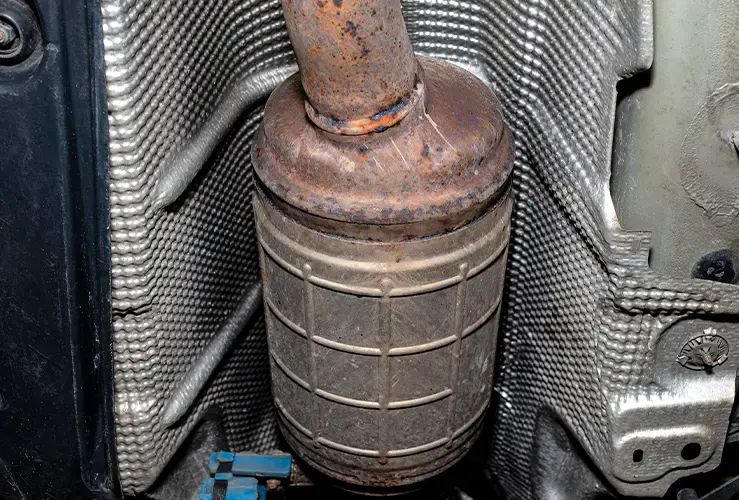
How the DPF filter works
- Filtration:
Exhaust gases pass through the porous walls of the DPF filter, which trap most soot particles, while allowing cleaner gases (like nitrogen and carbon dioxide) to pass through - and enter the atmosphere.
- Regeneration:
Over time, soot builds up inside the DPF. To prevent clogging, the filter periodically cleans itself - through a process called regeneration. This involves the trapped soot being burned off at high temperatures and then turned into ash. This ash doesn’t go anywhere and must eventually be cleaned or removed by a professional, often after 100,000 to 200,000 miles.
There are three main types of regeneration:
Passive regeneration: Happens naturally when the exhaust gets hot enough during normal driving (e.g., highway speeds).
Active regeneration: The engine control unit (ECU) injects extra fuel or adjusts timing to raise exhaust temperatures and burn off soot.
Forced regeneration: A manual or service procedure - for when the filter is heavily clogged.
What happens if a DPF fails completely?
If a DPF fails completely it could badly damage, or even destroy, the engine.
When a DPF gets badly clogged and cannot regenerate, it creates back pressure in the exhaust system. This back pressure puts a lot of strain on the engine, particularly on the turbocharger, EGR valve, and cylinder head. Failed regeneration attempts can also lead to fuel dilution in the oil, which reduces lubrication and accelerates wear: very bad news for engine components.
Excessive and prolonged back pressure can also blow turbo seals and head gaskets, and potentially even crack pistons.
In very exceptional circumstances, if oil or fuel enters the intake, the engine may “run away” which means it revs uncontrollably until it destroys itself.
So, while a healthy DPF supports the environment, it also supports your engine’s health, preventing you from being stranded by the roadside (and being landed with a hefty repair bill).
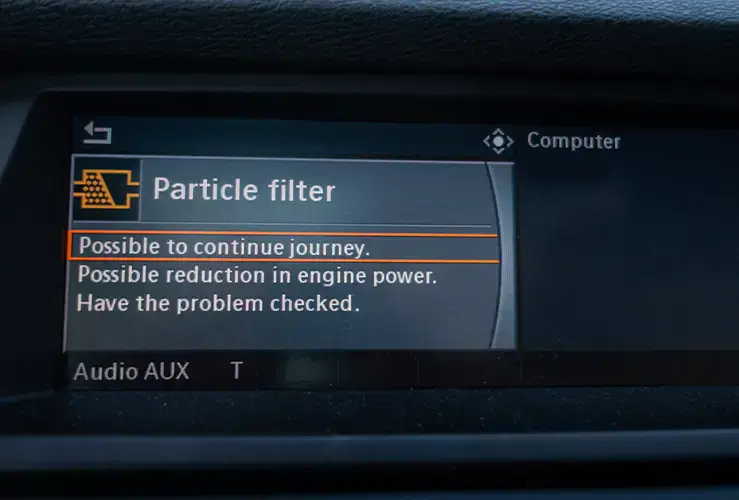
With this in mind, it’s very unwise to ignore the DPF warning light, should it appear.
How to clean a DPF?
As mentioned above, in most cases, the DPF is self-cleaning - as long as the engine temperature gets high enough to burn off the collected soot. For those who tend to make short trips in their car (e.g. school runs, short commutes), it may be necessary to take the vehicle for a longer drive, and maintain higher speeds in order to ensure regeneration takes place.
So it’s a good idea to undertake a motorway/dual carriageway trip every couple of weeks. Aim for 20-30 minutes on the road. You’ll be rewarded with a healthier DPF, that should last longer.
Should my DPF last for the lifetime of the car?
In theory, yes, your DPF should last for the lifespan of your car. However, if regenerations do not take place regularly enough, the DPF could become seriously clogged. It will then need to be cleaned by a professional, or even replaced - which can be costly.
What is a diesel particulate filter made of?
Your vehicle’s DPF is made of special material that is both heat-resistant and porous, meaning it will let cleaner gases like nitrogen through, but it will trap soot particles - or at least, most of them. Diesel car DPFs usually contain cordierite.
The DPF comprises thousands of tiny channels, the ends of which are alternately blocked which forces the gasses through the filter.
Diesel particulate filter problems
- Clogging: If a vehicle is only driven short distances, the engine never gets hot enough to burn off the soot. This can result in clogging, which due to increased back pressure, can in turn cause poor performance and reduced fuel economy.
- Sensor or pressure faults: These can affect regeneration cycles.
- Expensive replacement: If the DPF becomes damaged or too full of ash, it may need to be replaced, a process which is often expensive.
Signs your DPF is clogged
As soot and ash fill the filter’s channels, exhaust flow will become restricted. This means exhaust gases cannot escape easily (known as ‘back pressure’).
Symptoms include:
Warning lights appear on your dashboard - “DPF,” “Check Engine,” or “Regeneration Required” lights appear.
Loss of power - your engine may feel sluggish, especially when you attempt to accelerate.
Increased fuel consumption - the engine works harder to push exhaust gases through.
Your engine gets very hot - restricted exhaust flow raises heat in the turbo and engine.
Regeneration seems to be happening more often - the ECU tries to burn off soot more frequently.
Diesel particulate filters cost
Before you consider replacing your DPF, you should think about professional cleaning. This is likely to be much cheaper and could restore your DPF to 95% efficiency in some cases.
However, if your DPF is ‘too far gone’, replacement may be the only option to keep your vehicle roadworthy and operating within environmental regulation limits.
The cost of replacing your car’s DPF filter depends on several factors, including your make and model, engine size, and whether you are replacing it with an OEM (original equipment manufacturer) part, or an aftermarket part (the latter being cheaper but potentially less reliable).
The following table gives an indication of how much it might cost to replace your DPF.
Vehicle Type | Aftermarket DPF | OEM (Dealer) DPF | Notes |
Small car (e.g. Ford Fiesta, VW Polo) | £300–£700 | £800–£1,500 | Common diesel hatchbacks |
Medium car / SUV (e.g. VW Passat, BMW 3 Series) | £500–£900 | £1,200–£2,000 | Larger engines → larger DPF |
Large 4x4 / Van | £700–£1,200 | £1,800–£3,000 | More exhaust volume & heat |
Heavy goods vehicle (HGV) | £1,000–£3,000+ | £3,000–£6,000+ | Heavy-duty silicon carbide filters |
Labour costs
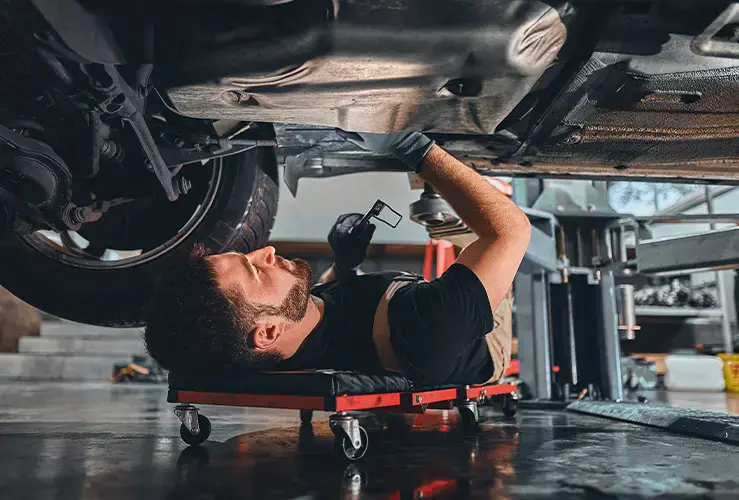
The cost of getting a professional to fit the new DPF would likely range from £150 to £300.
Is it possible to fail my MOT due to a faulty DPF?
Yes, your vehicle could fail its MOT if there is excessive smoke from the exhaust (which is often caused by a faulty DPF filter). It could also fail its MOT if there are any signs of tampering or removal. If warning lights come on, get the DPF diagnosed and cleaned before the MOT takes place.
Do DPFs get stolen?
Unfortunately, DPFs are indeed targeted by thieves, due to the precious metals contained within them. Platinum, palladium, and cerium can all be sold on to scrap merchants. The issue is made worse by the fact that they are relatively easy to locate and remove.
In summary
Your car’s DPF needs to be kept in good working order so that your vehicle meets emissions standards and doesn't suffer performance or fuel economy issues. Active or forced regeneration is the best way to do this, meaning you should take your vehicle on longer, higher speed runs every couple of weeks. If there are any signs the DPF is clogged or faulty, you should get it looked over by a professional as soon as possible.