



Could synthetic petrol and diesel prevent the demise of the combustion engine? Are carbon neutral fuels as environmentally-friendly as claimed? Is there any way synthetic fuel for cars could delay the 2035 ban on new combustion engine cars?
The death knell of the combustion engine has been sounding for some years.
Petrol cars have long been in the sights of climate-conscious governments - chiefly because of their substantial contribution towards global carbon emissions, and their effect on urban air quality.
But they're also costlier to run than hybrids and pure electric vehicles (long term), and more complex to keep in working order (with many more moving parts than an EV).
Fuel price fluctuations are another undesirable aspect of the petrol car.
All of which has prompted the UK and the EU to phase out the sale of new pure petrol and diesel vehicles by 2035.
So, the combustion engine is doomed…
…or is it?
Enter, synthetic fuel.
Well, synthetic fuel actually “entered” quite a while ago, having been developed by the Germans in the 1920s (they called it the Fischer-Tropsch process). Later, in World War II, the Germans harnessed synthetic fuels extensively for their tanks and planes, due to a lack of regular fuel oil.
The rise of ‘zero petrol’
More recently, companies like Synhelion SA, Infinium Holdings, and the UK’s own Zero Petroleum Limited (co-founded by a former Formula One engineer), have been working to create synthetic fuels. Such fuels are sometimes called ‘efuels’ or even ‘artificial gas’ in the US.
But unlike the Germans in the first half of the century, who used coal, for today’s producers alternative fuel for cars are only viable if made from renewable energy, and, crucially, do not add any more CO2 to the atmosphere that wasn't there already (more on this below).
Does synthetic car fuel work in any combustion engine?
Yes - the great thing about modern synthetic car fuels is that it can be added to existing combustion engine vehicles. That’s because chemically speaking, it’s still petrol (or diesel).
You could put synthetic fuel in a classic 1950s car and it would work just fine. Indeed, it may be better for the engine than regular petrol. The fact that older cars can use this alternative fuel is one of the biggest selling points.
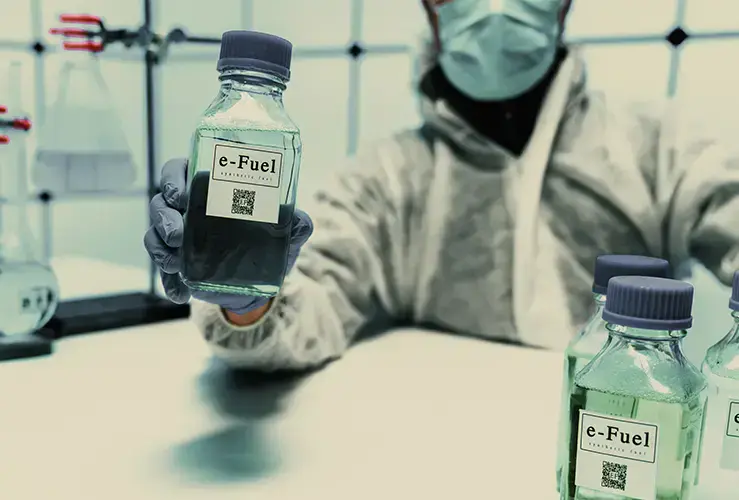
What is efuel? How is it made?
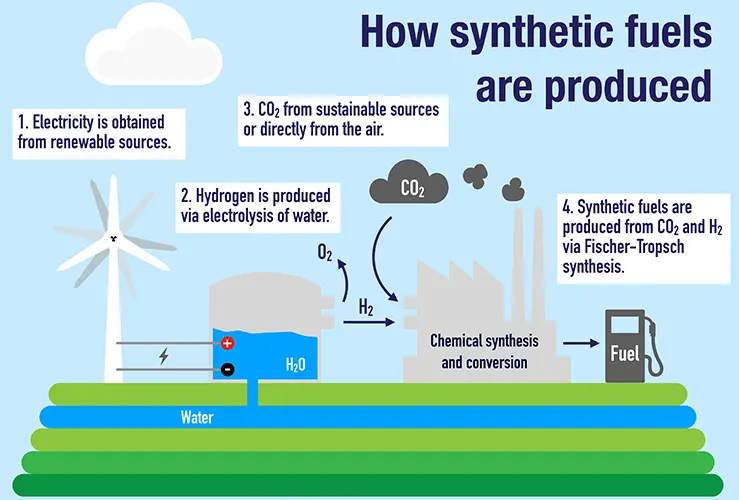
Today’s synthetic car fuels are made using an updated version of the Fischer-Tropsch process, combining hydrogen and captured CO2 to create hydrocarbons. It’s much cleaner than the old process of refining oil.
Why is synthetic fuel better for the environment?
The key word here is “captured”: CO2 that has already been produced by things like vehicles, planes and industry is captured from the environment and combined with hydrogen (the planet's most abundant element) by way of electrolysis.
This means that burning the resultant hydrocarbons is not adding any CO2 that wasn’t there before making it carbon neutral.
Sounds too good to be true. Are there any caveats?
Yes. The actual production of synthetic fuels, or ‘e-fuels’, is energy intensive. With this in mind, for a product to be considered a ‘carbon neutral fuel’ it must have been made using renewable energy sources like wind, solar, hydro and wave.
How common/popular are synthetic fuels in 2026?
While the synthetic fuel production process has come a long way since the 1920s, and when done right can be carbon neutral, usage of the fuel type is dwarfed by regular fossil-derived fuels.
That said, the synthetic fuel market is set to grow consistently in the coming years. Indeed, Vertex Market Research predicts the market will be worth “USD 7.19 Billion by 2036” - up from “USD 2.69 Billion in 2025”.
Various pilot and commercial projects are underway in Europe and the United States, which are already producing viable fuel for road vehicles and airliners.
But for synthetic fuels to properly rival established fossil-based fuels, production facilities would need to be expanded significantly.
So, can synthetic fuels save the petrol car?
It’s possible that synthetic fuel for cars could save the combustion engine from complete oblivion, at least for a while. The two factors in its favour are:
- Synthetic fuels can be ‘dropped in’ to existing combustion engine vehicles
- Synthetic fuels have the potential to be carbon neutral, if renewable energy is used in their production
However, there are a few downsides which will take some overcoming.
- Synthetic fuels are not very energy efficient: Making synthetic fuels uses a lot of energy, a lot more than simply powering a vehicle with electricity, because electrolysis, CO2 capture, and fuel synthesis each lose energy. However, improved processes and upscaling might bring costs down.
- Synthetic fuels are costly to produce: E-fuel production is still far more expensive than making fossil diesel or electricity, so large-scale adoption would depend on things like policy support, carbon pricing, and/or mandates.
- Infrastructure and scale gaps: Today’s production volumes are extremely modest compared with global fuel demand; scaling to mass market levels will take many years of investment (and sustained political will).
The bottom line
Synthetic fuels can, and indeed are, proving useful for helping some types of fleet rescue reduce their carbon footprint - especially in certain industries where decarbonising is challenging (aviation, shipping).
Synthetic fuels could prove useful for helping some fleets control their footprint while EV tech is built out across their operations.
Governments in the EU, UK and elsewhere are embedding support for synthetic fuels (especially sustainable aviation fuels - or SAFs) in legislation and policy, through a combination of mandates, incentives, and shifting rules.
But nothing is going to reverse the electrification trend: manufacturers, prompted by governments, have been refining their EV products for years. To reverse direction now, even if synthetic fuel use could be expanded in time, would be all but impossible.
EVs are here to stay, but synthetic fuels may yet give the combustion engine a stay of execution.